

How Schools Can Hire Young ( Fresher ) Teachers in India and Train Them Quickly – Complete Guide
Introduction
Many schools in India struggle to hire experienced teachers. Competition is increasing, salary expectations are rising, and experienced teachers often have multiple job offers. As a result, schools—especially new schools, budget schools, and schools in Tier 2 and Tier 3 cities—find it difficult to fill teaching vacancies on time.
A practical solution is to hire young, enthusiastic fresher teachers and train them systematically. Fresh graduates bring energy, adaptability, strong technology skills, and a willingness to learn. With the right guidance, they can become excellent teachers and long-term assets for your school.
This guide explains how schools can recruit fresher teachers and train them quickly to build a strong teaching team.
Why Schools Should Hire Fresher Teachers
Many schools focus only on experienced candidates, but experience is not the only factor that determines teaching quality.
Fresher teachers often:
- Learn new teaching methods quickly.
- Adapt easily to school culture.
- Are comfortable using digital learning tools.
- Have lower salary expectations.
- Accept feedback positively.
- Grow with the school over the years.
Many of today's best teachers started their careers as fresh graduates with proper mentoring and training.
1. Hire for Attitude, Not Just Experience
A fresher teacher may not have years of classroom experience, but they can still become an outstanding educator if they have the right attitude.
Look for candidates who have:
- Good communication skills
- Strong subject knowledge
- Confidence
- Positive attitude
- Passion for teaching
- Willingness to learn
Skills can be improved through training, but attitude is much harder to change.
2. Conduct a Proper Interview
Don't limit the interview to academic questions.
Ask candidates about:
- Why they want to become teachers.
- How they would explain a simple topic.
- How they would handle classroom challenges.
- How they respond to feedback.
These questions help identify candidates with the right mindset.
Read Also-How to Start a Play School in India: Complete Step-by-Step Guide
3. Always Conduct a Demo Class
A classroom demo is one of the best ways to evaluate a fresher teacher.
Observe:
- Teaching style
- Communication skills
- Confidence
- Student interaction
- Classroom management
- Subject clarity
A good demo class often provides more insights than a lengthy interview.
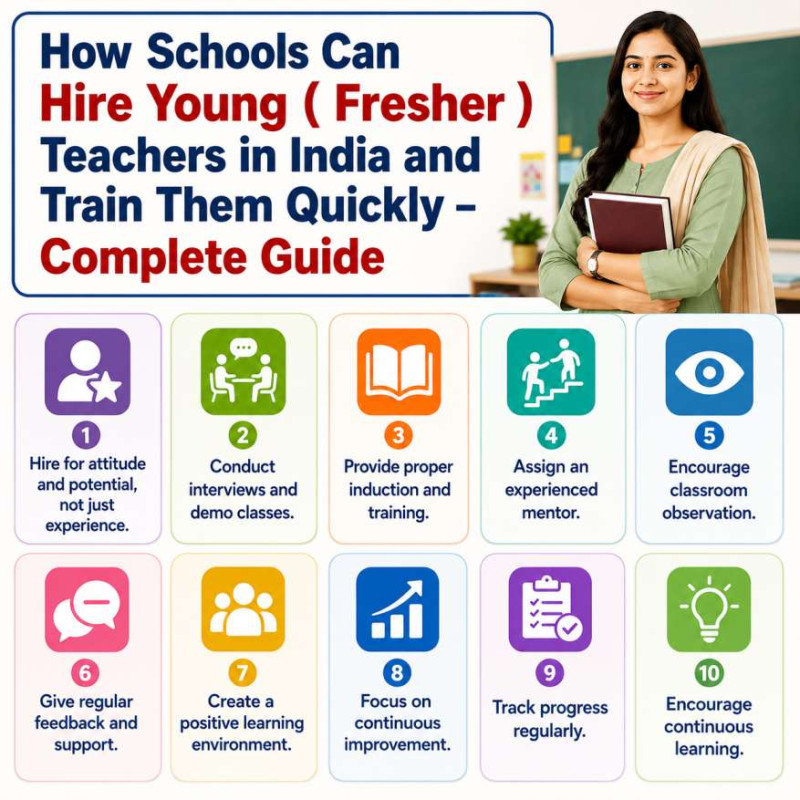
4. Create a Simple Induction Program
Fresh teachers need proper guidance before they start teaching independently.
Your induction program should include:
- School policies
- Lesson planning
- Classroom management
- Assessment methods
- Parent communication
- School technology
A structured induction helps teachers become productive much faster.
5. Assign an Experienced Mentor
Pair every fresher teacher with an experienced teacher for the first few months.
Mentors can help with:
- Lesson planning
- Classroom discipline
- Student engagement
- Parent interaction
- Daily classroom challenges
Mentoring builds confidence and reduces common beginner mistakes.
6. Encourage Classroom Observation
Before taking full responsibility for a class, fresher teachers should observe experienced teachers.
They learn:
- How lessons are delivered
- Classroom discipline techniques
- Student engagement methods
- Time management
- Question handling
Observation helps them gain practical classroom experience.
Read Also-How to Hire a School Principal in India (2026 Guide) – Interview Questions, Salary, Skills, Process & Hiring Tips
7. Provide Weekly Training
Teacher learning should continue even after joining.
Conduct weekly sessions on:
- Teaching methods
- Classroom management
- Child psychology
- Communication skills
- Educational technology
- Student assessment
Even one hour of training every week leads to continuous improvement.
8. Give Regular Feedback
Don't wait for annual appraisals.
Observe classrooms regularly and provide constructive feedback.
Discuss:
- What the teacher is doing well.
- Areas for improvement.
- Practical suggestions.
- Goals for the next month.
Regular feedback helps fresher teachers improve quickly.
9. Build a Supportive School Culture
Young teachers perform better when they feel supported.
Encourage:
- Teamwork
- Open communication
- Sharing lesson ideas
- Professional respect
- Continuous learning
A positive school culture improves both teacher performance and retention.
10. Focus on Continuous Improvement
Don't expect perfection in the first few weeks.
Instead, measure progress in:
- Teaching confidence
- Student engagement
- Classroom management
- Communication
- Lesson planning
- Professional behaviour
Consistent improvement is a sign that your training is working.
Common Mistakes Schools Make While Hiring Fresher Teachers
Many schools hesitate to hire fresher teachers because they lack classroom experience. However, the real challenge is often not hiring freshers—it's how schools support them after hiring. With the right guidance, many young teachers can become confident and effective educators.
Here are some common mistakes schools should avoid:
- Hiring without a demo class, which makes it difficult to assess teaching ability.
- Expecting freshers to perform like experienced teachers from Day One.
- Providing little or no induction training before assigning classes.
- Giving difficult classes or heavy workloads immediately after joining.
- Not assigning an experienced mentor to guide new teachers.
- Giving very little feedback, leaving teachers unsure about how to improve.
- Focusing only on academic qualifications instead of communication skills, attitude, and willingness to learn.
By avoiding these mistakes and investing a little time in training and mentoring, schools can develop fresher teachers into confident professionals. This not only improves classroom performance but also increases teacher satisfaction, retention, and long-term success.
Real School Problem & Practical Solution
As founders of SchoolNaukri, we regularly speak with school owners and principals across India to understand their real hiring challenges. One conversation with a school founder from Uttar Pradesh has stayed with us.
He shared that just a few weeks before the board examinations, one of his experienced teachers resigned after receiving a better job offer. The news came as a complete shock. Finding a qualified replacement at such a critical time was extremely difficult. Teachers were already in high demand, interviews had to be conducted urgently, and the school had very little time to make the right hiring decision. Although the school somehow managed to complete the academic session, it created unnecessary stress for the management, teachers, and students.
This experience highlights an important lesson for every school. Relying only on experienced teachers can be risky. Schools should also invest in hiring young, motivated fresher teachers and train them throughout the year. When experienced teachers leave unexpectedly, these trained teachers can step in with confidence and ensure that students' learning continues without disruption.
From our experience, the schools that build a balanced team of experienced and fresher teachers are usually better prepared for unexpected vacancies and face far fewer last-minute hiring challenges.
How SchoolNaukri Helps Schools Hire Fresher Teachers
SchoolNaukri makes it easy for schools to discover talented fresher teachers from across India.
- Access 10 Lakh+ active teacher resumes.
- Search candidates by subject, qualification, experience, and location.
- Find both fresher and experienced teachers.
- Shortlist candidates for interviews and demo classes.
- Register your school in just 2 minutes and start hiring.
Visit www.schoolnaukri.com to find qualified fresher teachers and build your future teaching team.
Frequently Asked Questions (FAQs)
1. Is it a good idea to hire fresher teachers?
Yes. Hiring fresher teachers can be a smart decision, especially when schools provide proper training and guidance. Young teachers are often eager to learn, adapt quickly to new teaching methods, and grow with the school. With mentoring and regular feedback, they can become valuable long-term members of your teaching team.
2. How can schools train fresher teachers quickly?
Schools can help fresher teachers become classroom-ready by providing a simple induction program, assigning an experienced mentor, conducting classroom observations, organizing weekly training sessions, and giving regular feedback. A structured training plan helps new teachers gain confidence and improve much faster.
3. What qualities should schools look for in fresher teachers?
Instead of focusing only on experience, schools should look for candidates with strong communication skills, good subject knowledge, confidence, a positive attitude, willingness to learn, and a genuine interest in teaching children. These qualities are often more important than years of experience.
4. Should schools conduct demo classes for fresher teachers?
Yes. A demo class is one of the best ways to evaluate a candidate before hiring. It allows schools to observe how the teacher explains concepts, communicates with students, manages the classroom, and handles questions. A good demo class gives a much clearer picture than an interview alone.
5. How can schools find qualified fresher teachers in India?
Schools can use trusted teacher recruitment platforms like SchoolNaukri to search teacher resumes, post vacancies, shortlist candidates, and connect with qualified fresher teachers from across India. This saves time and provides access to a much larger pool of teaching talent.
6. Should schools hire only experienced teachers?
Not necessarily. Experienced teachers bring valuable knowledge, but fresher teachers often bring new ideas, enthusiasm, and a willingness to learn. A balanced team of experienced and young teachers usually creates the best learning environment for students.
7. How long does it take to train a fresher teacher?
Most fresher teachers become comfortable in the classroom within 2–3 months when they receive proper mentoring, regular classroom observations, and continuous feedback. Schools that invest in teacher training usually see better performance and higher teacher retention in the long run.
Conclusion
Hiring fresher teachers is not about choosing a cheaper option—it is about finding talented people who are ready to learn and grow with your school. With the right hiring process, regular training, and support from experienced teachers, fresh graduates can become confident and effective educators.
Instead of waiting only for experienced candidates, schools should also give deserving freshers an opportunity. By hiring early, conducting demo classes, providing proper mentoring, and creating a positive work environment, schools can build a strong teaching team for the long term.
A good teacher is not made by experience alone. With the right guidance and encouragement, today's fresher teacher can become tomorrow's best teacher.