

Why Private Schools in Jharkhand Struggle to Hire Qualified Teachers | Teacher Recruitment Challenges & Solutions
Introduction
Finding the right teacher is one of the most important responsibilities for a private school. A school may have excellent infrastructure, a strong academic plan and good student enrolment, but without capable teachers, it becomes difficult to deliver the quality of education parents expect.
Across Jharkhand, private schools may face different teacher-hiring challenges depending on their location, school board, salary structure, subject requirements and access to candidates. The situation can also differ between larger education centres such as Ranchi and Jamshedpur and schools in smaller towns or more remote areas.
For school owners and principals, the challenge is not simply finding someone who is available. The real challenge is finding a teacher who has the right qualification, subject knowledge, classroom ability, communication skills and attitude.
This guide explains the major teacher recruitment challenges faced by private schools in Jharkhand and practical ways to improve the hiring process.
Why Do Private Schools in Jharkhand Struggle to Hire Qualified Teachers?
Private schools in Jharkhand may face teacher recruitment challenges due to a limited pool of qualified candidates, salary constraints, teacher migration, location-related difficulties, competition for experienced teachers, and shortages of specialised subject teachers. Schools can improve hiring by expanding their recruitment reach, considering promising freshers, and providing proper training and mentoring.
Table of Contents
- Why Private Schools in Jharkhand Struggle to Hire Teachers
- Teacher Recruitment in Major Jharkhand Cities
- Ranchi
- Jamshedpur
- Dhanbad
- Bokaro
- Deoghar
- Hazaribagh
- Why Teacher Migration Is a Challenge in Jharkhand
- How to Hire Fresher Teachers in Jharkhand
- Hiring PRT, TGT and PGT Teachers in Jharkhand
- Step-by-Step Process to Hire Private School Teachers Faster
- Verify Teacher Eligibility Before Hiring
- Average Teacher Salary in Jharkhand
- Don't Stop at Hiring: Train Your Teachers
- SchoolNaukri Insight: Building a Stronger Teacher Hiring Process
- How SchoolNaukri Helps Schools Recruit Teachers in Jharkhand
- Common Teacher Hiring Mistakes Schools Should Avoid
- Frequently Asked Questions
- Conclusion
- About the Authors
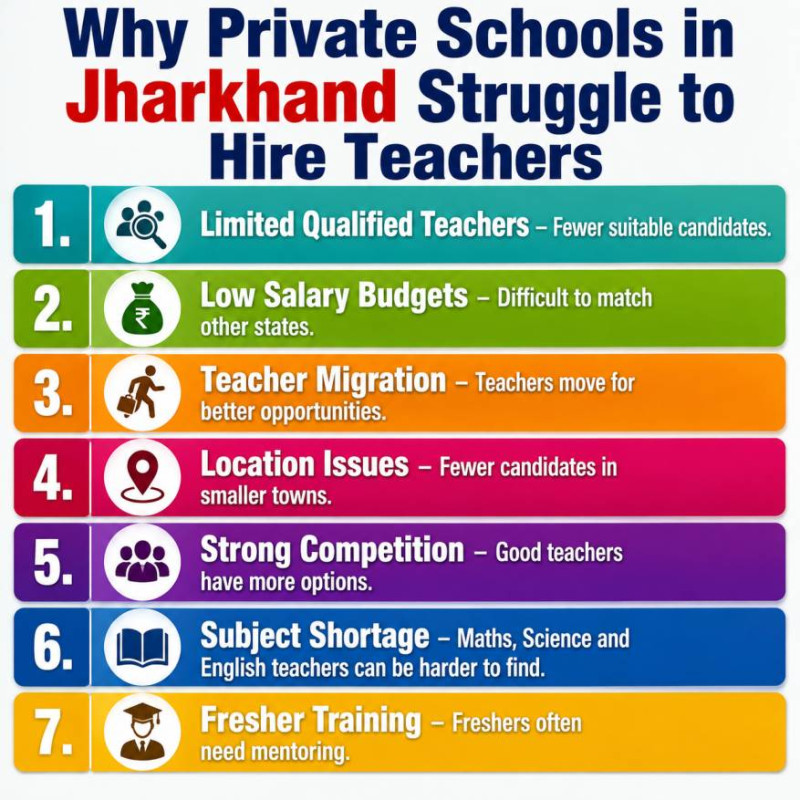
Why Private Schools in Jharkhand Struggle to Hire Teachers
1. Limited Qualified Teachers
Some schools may receive applications but still struggle to find candidates who meet the required qualification and subject-specific requirements. This can be particularly challenging when schools need experienced teachers for specialised subjects or senior classes.
2. Salary Expectations
Experienced teachers often compare salary, workload, working hours, location and responsibilities before accepting an offer. Smaller private schools may find it difficult to compete with schools offering higher compensation packages.
3. Teacher Migration
Migration can reduce the local pool of available teachers. Some qualified teachers may move from smaller towns to Ranchi, Jamshedpur, other major cities, or outside Jharkhand in search of better salaries, career opportunities and professional growth. This can make it harder for schools in certain locations to retain and recruit experienced teachers.
4. Location Issues
Teacher availability can vary significantly between cities and smaller towns. Schools located outside major urban centres may have fewer candidates willing to travel long distances or relocate for a teaching position.
5. Strong Competition for Good Teachers
Good teachers may receive opportunities from several schools at the same time. If the recruitment process is slow, a school may lose a suitable candidate before completing the interview or selection process.
6. Shortage of Subject Teachers
Finding teachers for subjects such as Mathematics, Science, English, Computer Science and other specialised areas can sometimes be more difficult, particularly for TGT and PGT positions.
7. Fresher Teachers Need Support
Fresh graduates can bring strong subject knowledge, enthusiasm and new ideas but may have limited classroom experience. Schools can evaluate their subject knowledge, communication, teaching aptitude and demo-class performance, followed by proper induction and mentoring.
Teacher Recruitment in Major Jharkhand Cities
Teacher hiring does not look the same in every part of Jharkhand. A school in Ranchi may have access to a larger candidate pool, while a school in a smaller city may need to reach candidates from outside the local area.
Teacher Recruitment in Ranchi
Ranchi has a strong education ecosystem and a larger pool of teachers. However, schools also compete with each other for experienced candidates. A clear vacancy and quick hiring process can help schools avoid losing good candidates.
Teacher Recruitment in Jamshedpur
Schools in Jamshedpur may have access to experienced teachers, but specialised positions can still take time to fill. For difficult vacancies, expanding the search beyond the immediate area can be useful.
Teacher Recruitment in Dhanbad
Schools in Dhanbad may need both experienced teachers and promising freshers. Instead of depending only on personal references, schools can use wider online recruitment to reach more candidates.
Also Read - How to Hire English Teachers in Jharkhand – Complete Guide for Schools
Teacher Recruitment in Bokaro
For schools in Bokaro, clearly defining the subject, class level, qualification and experience can help attract more relevant applicants. A demo class can then help assess actual teaching ability.
Teacher Recruitment in Deoghar
Location can be an important consideration for schools in Deoghar and nearby areas. Mentioning the school location, salary, working hours and responsibilities clearly can help candidates make an informed decision.
Teacher Recruitment in Hazaribagh
Schools in Hazaribagh may sometimes need to look beyond their immediate network for experienced or specialised teachers. Online recruitment can help expand the search without depending entirely on local candidates.
SchoolNaukri Insight: Why Teacher Migration Is a Challenge in Jharkhand
As the founders of SchoolNaukri, we speak with many school principals and founders, and one challenge we hear repeatedly is teacher migration.
Many private schools in Jharkhand operate in areas where families have limited fee-paying capacity. When schools cannot charge higher fees, their ability to offer competitive teacher salaries can also be limited. This creates a difficult cycle: schools need good teachers, but their budgets may not always allow them to match salaries offered by schools in larger cities or other states.
As a result, some qualified and experienced teachers may choose to move to places such as Bengaluru, Delhi NCR, Maharashtra, or other states where they see better salary and career opportunities.
Our Practical Advice to Jharkhand Schools
If hiring experienced teachers within the school's budget is difficult, schools can also consider hiring promising fresher teachers and training them.
A fresher with good subject knowledge, communication skills and the right attitude can become an effective teacher with proper induction, mentoring, classroom guidance and regular training.
How to Hire Fresher Teachers in Jharkhand
Hiring a fresher does not have to mean compromising on teaching quality.
A fresher teacher can become a valuable member of the school team when the school evaluates the candidate properly and provides the right support after joining.
When hiring a fresher teacher, schools should look at:
- Subject knowledge
- Communication skills
- Confidence
- Teaching aptitude
- Demo-class performance
- Ability to explain concepts
- Willingness to learn
- Classroom-management potential
A good fresher may need training, but the same is true for experienced teachers when they join a new school and need to understand its systems and expectations.
Read Also -How to Find and Hire Teachers for Schools in Jharkhand | Complete School Hiring Guide
Hiring PRT, TGT and PGT Teachers in Jharkhand
Schools don't need to follow the same hiring approach for every teacher. The expectations change with the class level and the subject being taught.
For Primary Teachers
At the primary level, look for someone who can explain concepts simply, communicate well with children, and create a comfortable classroom environment. Patience and classroom management are just as important as qualifications.
For Middle and Secondary Classes
For teachers working with Classes 6–10, schools should give more attention to strong subject knowledge, lesson planning and the ability to explain difficult topics clearly. A demo class can be very helpful here.
For Senior Classes
For Classes 11–12, subject expertise becomes especially important. Schools should also consider board-exam experience, assessment skills and the ability to prepare students for higher-level examinations.
Step-by-Step process to hire Private School teachers in jharkhand Faster
A simple and organised hiring process can help schools fill vacancies faster without rushing into the wrong decision.
Step 1: Clearly Define the Vacancy
Before looking for candidates, be clear about what you need. Mention the subject, classes, qualification, experience, salary, location, responsibilities and expected joining date.
Step 2: Reach More Teachers
Don't depend only on references or walk-in candidates. Online recruitment can help you reach teachers from a much wider area, including experienced teachers and freshers.
Step 3: Check Resumes Carefully
Don't look only at the degree. Check the candidate's subject, previous school experience, classes taught and overall career background.
Step 4: Make a Shortlist
Select candidates who are actually suitable for the vacancy. A smaller list of relevant candidates is usually better than interviewing dozens of unsuitable applicants.
Step 5: Conduct the Interview
Use the interview to understand the candidate beyond the resume. Ask about teaching methods, classroom situations, communication, subject knowledge and their approach to students.
Step 6: Take a Demo Class
A demo class can tell you a lot more than a resume. See whether the teacher can explain concepts clearly, engage students and manage the classroom.
Step 7: Verify Documents
Before making the final appointment, check the candidate's educational certificates, teaching qualifications and relevant experience.
Step 8: Hire and Onboard Properly
Once you select the teacher, clearly explain the salary, responsibilities, working hours and school expectations. Give the new teacher proper induction and support so they can settle into the school.
Verify Teacher Eligibility Before Hiring
Schools should verify the applicable qualification requirements before appointing a teacher.
The National Council for Teacher Education (NCTE) publishes minimum-qualification notifications and amendments for school teachers. Schools should refer to the latest applicable requirements rather than relying on outdated information.
Average Teacher Salary in Jharkhand
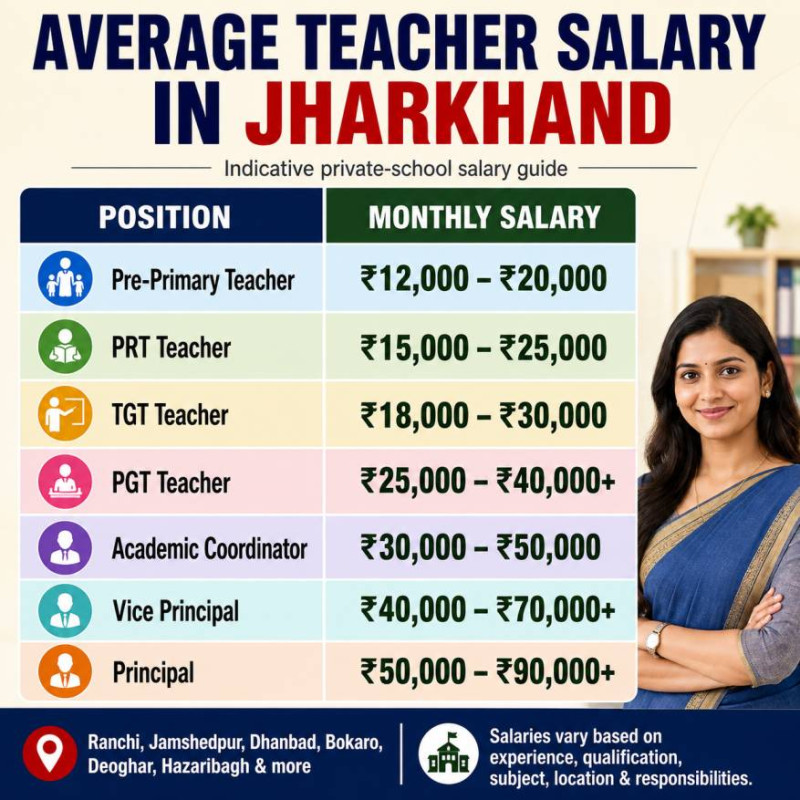
Teacher salaries in Jharkhand vary depending on the school board, qualification, teaching experience, subject, position, school location, and responsibilities. Schools in areas such as Ranchi, Jamshedpur, Dhanbad, Bokaro, Deoghar, and Hazaribagh may offer different salary packages.
The figures below are an indicative private-school salary guide, not fixed market rates. Actual offers may vary based on the school, candidate's experience, qualifications, subject expertise, location, and responsibilities.
| Position | Indicative Monthly Salary |
|---|---|
| Pre-Primary Teacher | ₹12,000 – ₹20,000 |
| PRT Teacher | ₹15,000 – ₹25,000 |
| TGT Teacher | ₹18,000 – ₹30,000 |
| PGT Teacher | ₹25,000 – ₹40,000+ |
| Academic Coordinator | ₹30,000 – ₹50,000 |
| Vice Principal | ₹40,000 – ₹70,000+ |
| Principal | ₹50,000 – ₹90,000+ |
Don't Stop at Hiring: Train Your Teachers
Hiring should be the beginning of teacher development, not the end.
As the founders of SchoolNaukri, we see schools focus on teacher training after hiring because even a qualified teacher needs time to understand a new school's academic systems, classroom expectations, student profile, assessment methods and school culture.
New teachers may benefit from support in:
- Lesson planning
- Classroom management
- Student assessment
- Parent communication
- Digital teaching tools
- School policies
- Academic planning
- Student engagement
This is particularly important for fresher teachers.
For CBSE schools, teacher development is also an important part of the affiliation framework. CBSE states that affiliated schools are required to organise teacher training, and its training guidance highlights the importance of developing teaching skills and subject knowledge.
NCTE's National Professional Standards for Teachers also emphasise teacher competence, professional growth and development.
Read Also-How to Hire Science Teachers in Jharkhand – Practical Recruitment Tips
SchoolNaukri Insight
As the founders of SchoolNaukri, we have seen that successful teacher recruitment is not just about filling a vacancy.
A school needs to ask:
Can this person teach effectively, connect with students, work with our academic team and continue developing after joining?
That is why the recruitment process should continue from resume screening to interview, demo class, verification, onboarding, mentoring and training.
A school that builds this complete process is better positioned to make consistent hiring decisions instead of making rushed appointments whenever a vacancy becomes urgent.
How SchoolNaukri Helps Schools Recruit Teachers in Jharkhand
SchoolNaukri is built specifically for school hiring and teacher recruitment.
Schools can:
- Register their school in 2 minutes with AI
- Post teacher vacancies
- Access 10 lakh+ teacher resumes
- Find fresher and experienced teachers
- Recruit PRT, TGT and PGT teachers
- Search for subject-specific candidates
- Shortlist candidates based on hiring requirements
- Conduct interviews and demo classes
- Choose recruitment packages based on their requirements
- Build a wider candidate pipeline
SchoolNaukri is used by 20,000+ registered schools across India, helping schools connect with teachers across different locations and experience levels.
SchoolNaukri Insight
For a school in Jharkhand, the biggest advantage of online recruitment is not simply receiving more applications.
It is having the ability to reach beyond the school's immediate local network and build a larger pool of potential teachers.
That can be particularly useful when recruiting specialised, experienced or fresher teachers.
Common Teacher Hiring Mistakes Schools Should Avoid
Hiring Only on Qualification
A degree does not automatically make someone an effective classroom teacher. Teaching ability should also be evaluated.
Skipping the Demo Class
A demo class can reveal how clearly a candidate explains concepts and engages students.
Hiring in a Hurry
An urgent vacancy can create pressure, but rushing the selection process can lead to a poor fit.
Ignoring Fresher Candidates
Some freshers have strong subject knowledge and excellent teaching potential. A proper evaluation and training system can help them develop.
Depending Only on Local References
Personal references can be useful, but relying only on them can restrict the candidate pool.
Not Training New Teachers
Even experienced teachers need time to understand a new school's systems, expectations and classroom culture.
Focusing Only on Salary
Salary matters, but schools should also clearly communicate workload, responsibilities, working hours, expectations and development opportunities.
Read Also- How to Hire Computer Teachers in Jharkhand Schools
Frequently Asked Questions
How can private schools hire qualified teachers in Jharkhand?
Schools can define their requirements, post vacancies online, review relevant teacher profiles, conduct interviews and demo classes, verify documents and provide proper onboarding after selection.
How can schools hire fresher teachers in Jharkhand?
Schools can evaluate freshers based on subject knowledge, communication, teaching aptitude, confidence and demo-class performance, followed by proper mentoring and training.
How can schools hire teachers in Ranchi?
Schools in Ranchi can use online recruitment to reach a wider pool of teacher candidates and then shortlist candidates based on subject, qualification, experience and school requirements.
How can schools recruit teachers in Jamshedpur?
Schools can create detailed vacancies, reach candidates online, conduct structured interviews and demo classes, and verify qualifications before making an appointment.
How can schools hire teachers in Dhanbad?
Schools can expand their recruitment reach beyond local references, particularly when looking for specialised or experienced teachers.
How can schools hire teachers in Bokaro?
Schools can post subject-specific vacancies and evaluate candidates through resume screening, interviews and demo classes.
How can schools find PRT, TGT and PGT teachers in Jharkhand?
Schools can create separate vacancies for each teaching level and clearly mention the required subject, class level, qualification and experience.
How can schools recruit female teachers in Jharkhand?
Schools should clearly communicate the role, qualification, salary, location and responsibilities and evaluate candidates based on professional qualifications, teaching skills and suitability for the position.
What should schools check before hiring a teacher?
Schools should check qualification, subject knowledge, relevant experience, communication, demo-class performance, classroom-management ability and documents.
Why is teacher training important after recruitment?
Training helps new teachers understand the school's academic systems, classroom expectations, assessment methods and culture. It is especially useful for freshers and teachers joining a new school.
What is a teacher recruitment platform?
A teacher recruitment platform helps schools post vacancies, reach teacher candidates, review profiles and manage parts of the recruitment process online.
How can SchoolNaukri help schools in Jharkhand?
SchoolNaukri helps schools register, post vacancies, access teacher resumes, shortlist candidates and recruit teachers across different subjects, experience levels and locations.
Conclusion
Teacher recruitment in Jharkhand is not simply about finding someone who has the required degree. The right teacher needs to understand the subject, communicate clearly, manage a classroom, connect with students and fit into the school's academic environment.
For schools in Ranchi, Jamshedpur, Dhanbad, Bokaro, Deoghar, Hazaribagh and other parts of Jharkhand, expanding recruitment beyond traditional local methods can help create a wider candidate pool.
Schools should also avoid overlooking promising fresher teachers. With proper interviews, demo classes, onboarding, mentoring and training, a good fresher can develop into a valuable member of the teaching team.
About the Authors
Atul Kumar (M.Tech, IIT Bombay) and Abhishek Ranjan (MBA) are the founders of SchoolNaukri, a school-focused teacher recruitment and hiring platform serving schools across India.
With experience in school recruitment, they work closely with principals, founders, HR teams, and school management on teacher hiring, candidate evaluation, interviews, and staffing.
Our Experience
- 20,000+ schools supported with teacher recruitment
- 10 lakh+ teachers connected with teaching opportunities
- Expertise in PRT, TGT, PGT, Principal and school staff recruitment
- Practical experience in teacher interviews, demo-class evaluation, candidate screening, and hiring
They are also the authors of The Ultimate School Hiring Workbook, a practical guide featuring teacher interview questions, written tests, evaluation tools, and hiring checklists for schools.