
How to Become a PRT Teacher: Full Form, Qualification, Eligibility, Salary, Jobs & Career Guide
Introduction
Table of Contents
- What Is a PRT Teacher?
- PRT Full Form and Role of a Primary Teacher
- What Does a PRT Teacher Do?
- How to Become a PRT Teacher
- PRT Teacher Qualification and Eligibility
- Is B.Ed Required for PRT Teachers?
- Is CTET Required for PRT Teachers?
- PRT Teacher Salary in India
- Skills Required to Become a PRT Teacher
- How Freshers Can Become PRT Teachers
- How to Apply for PRT Teacher Jobs
- PRT Teacher Interview and Demo Class Preparation
- How to Create a PRT Teacher Resume
- PRT Teacher Career Growth
- Frequently Asked Questions About PRT Teachers
- SchoolNaukri Insight: Keep Learning, Keep Growing
- How SchoolNaukri Helps Teachers Find PRT Jobs
- Conclusion: Building a Career as a PRT Teacher
What Is a PRT Teacher?
PRT stands for Primary Teacher.
A PRT teacher generally teaches students in the primary section of a school. The exact classes can vary between schools and education boards.
Teaching at this level is not only about completing the syllabus. PRT teachers also help children develop basic learning habits, communication skills, confidence, discipline and interest in studies.
If you enjoy explaining things patiently and working with young learners, PRT teaching can be a suitable career path.
What Is the Full Form of PRT?
PRT stands for Primary Teacher.
A PRT teacher usually teaches students at the primary level and helps them build a strong foundation in subjects such as English, Mathematics, Environmental Studies, Hindi and other subjects depending on the school.
You can find PRT teaching opportunities in different types of schools, including:
- Private schools
- CBSE schools
- ICSE schools
- State-board schools
- Government schools
The qualification and eligibility requirements can vary from one school or recruitment to another. So, before applying, always check the specific PRT job requirements mentioned by the school.
What Does a PRT Teacher Do?
A primary teacher has responsibilities beyond simply teaching a subject.
Some common responsibilities include:
- Teaching primary-level students
- Preparing daily lesson plans
- Explaining concepts in an easy way
- Conducting classroom activities
- Checking homework and classwork
- Preparing students for tests and examinations
- Maintaining classroom discipline
- Communicating with parents when required
- Tracking student progress
- Supporting children's overall development
A good PRT teacher needs patience because young students may learn at different speeds.
Read Also- PRT (Primary Teacher) English Teacher Interview Questions and Answers – Complete Guide for School Jobs in India
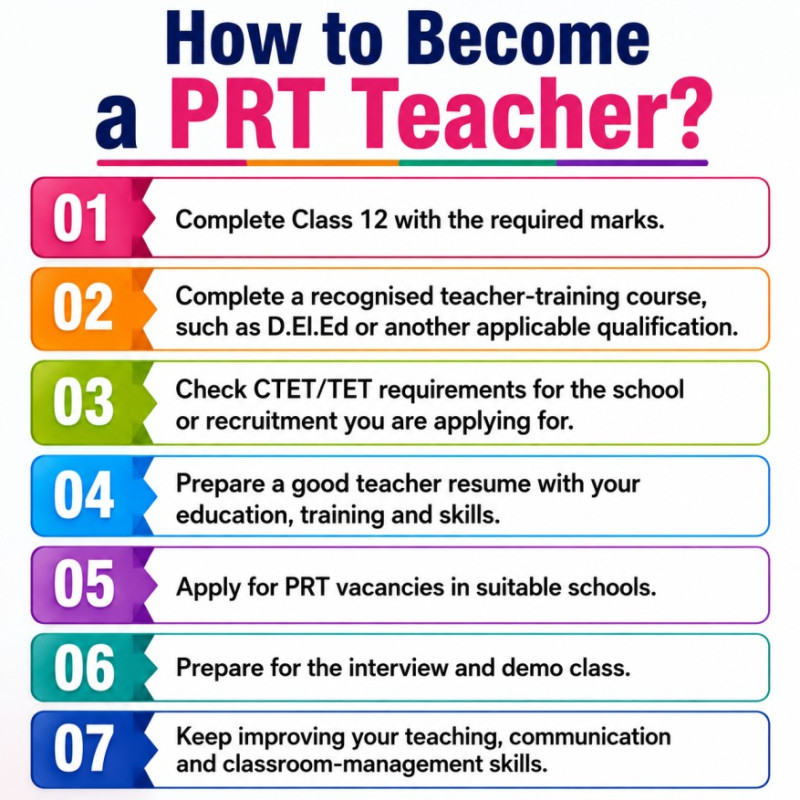
How to Become a PRT Teacher?
If you want to become a PRT teacher, the first thing to do is check what qualification the schools you want to apply to are asking for. The requirements can be different for government schools, private schools and different school boards.
A simple way to start is:
Complete your education → Get the required teacher-training qualification → Check CTET/TET or other requirements → Prepare your resume → Apply for PRT jobs → Attend the interview and demo class
If you are a fresher, don't worry if you don't have school experience yet. Many private schools also consider freshers based on their qualification, communication skills, subject knowledge and performance in the demo class.
Before applying, always read the individual job description carefully. The qualification required for one PRT vacancy may not be exactly the same as another.
PRT Teacher Qualification
The qualification needed to become a PRT teacher can vary depending on the school, state, board and type of recruitment. So, there isn't one qualification that applies to every PRT job in India.
Depending on the vacancy, schools or recruiting authorities may ask for qualifications such as:
- Class 12 / Senior Secondary
- D.El.Ed or equivalent teacher-training qualification
- B.El.Ed
- Graduation with a relevant teacher-training qualification, where applicable
- TET or CTET, if required for the particular recruitment
If you are planning to apply for a PRT job, don't rely only on general eligibility information. Always check the qualification mentioned in the actual job vacancy before applying. This will help you avoid applying for jobs where you don't meet the required criteria.
Is B.Ed Required for PRT Teachers?
This is a common question, especially among teachers who are planning their first PRT job.
B.Ed is not compulsory for every PRT position. The qualification you need depends on the school, recruitment rules and the type of teaching position.
Some PRT vacancies may accept qualifications such as D.El.Ed, B.El.Ed or other recognized teacher-training qualifications. Some positions may have different requirements.
So, don't assume that every PRT job requires B.Ed. Always check the qualification mentioned in the specific vacancy before applying.
Is CTET Required for PRT?
CTET can be important if you are applying for a PRT position where it is part of the eligibility requirements.
However, CTET requirements can differ depending on the school and recruitment. For example, government recruitment may have specific rules, while private schools can have their own hiring requirements.
Before applying, check:
- The qualification mentioned in the job advertisement
- Whether CTET or TET is required
- Your teacher-training qualification
- Any state-specific eligibility rules
Having CTET can be useful, but clearing CTET by itself does not guarantee a teaching job.
Read Also- What qualifications are required for PRT teachers?
PRT Teacher Eligibility Criteria
There isn't one eligibility rule for every PRT job. It can change based on the school, state, board and recruitment authority.
A PRT vacancy may consider:
- Your educational qualification
- Teacher-training qualification
- CTET/TET, where required
- Age limit, if applicable
- Subject or language requirements
- Teaching experience, if required
If you are applying for a particular PRT vacancy, read the job requirements carefully before submitting your application. This is the safest way to know whether you are eligible.
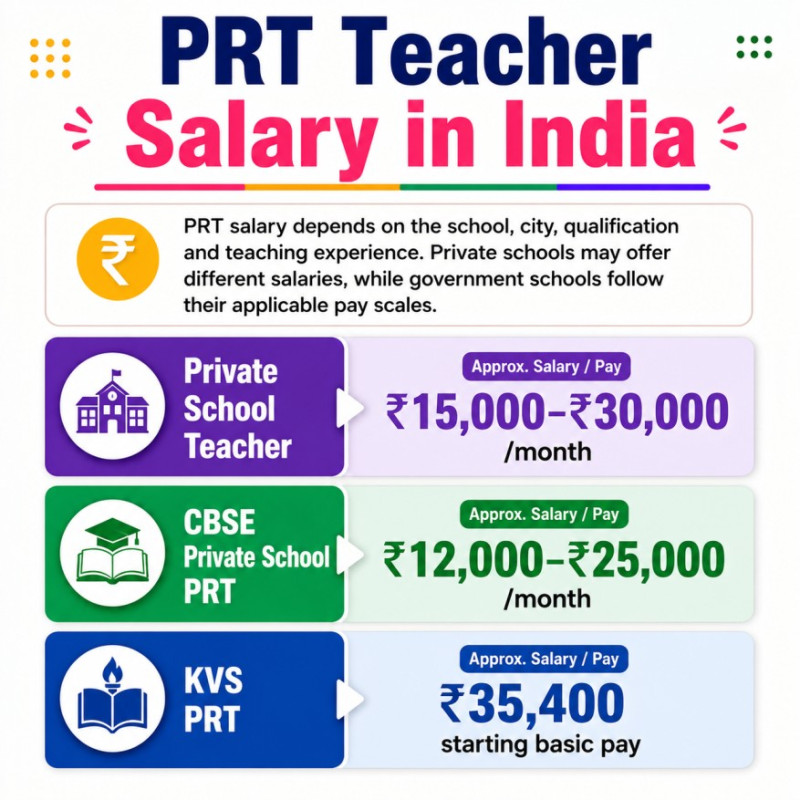
PRT Teacher Salary in India
PRT salary depends on the school, city, qualification and teaching experience. Private schools may offer different salaries, while government schools follow their applicable pay scales.
| PRT Job | Approx. Salary / Pay |
|---|---|
| Private School Teacher | ₹15,000–₹30,000/month |
| CBSE Private School PRT | ₹12,000–₹25,000/month |
| KVS PRT | ₹35,400 starting basic pay |
Private-school figures are based on published salary information from Shiksha, while KVS pay is based on the applicable official pay structure. (Shiksha)
Note: Actual salary can vary depending on experience, location, school and allowances. Always check the salary mentioned in the specific vacancy before applying.
Read Also - What is the salary of a PRT teacher?
What Skills Does a PRT Teacher Need?
Qualifications may help you become eligible, but good teaching skills can make a big difference during selection.
A PRT teacher should ideally have:
- Patience
- Clear communication
- Good subject knowledge
- Classroom-management skills
- Creativity
- Confidence
- Ability to explain concepts simply
- Basic digital skills
- Positive attitude
- Ability to work with children
For freshers, schools may also look at teaching potential, communication and classroom confidence rather than only years of experience.
How Can Freshers Become PRT Teachers?
Starting your first teaching job can feel difficult when you don't have school experience. But you can still apply for PRT positions if you have the required qualification and the school accepts freshers.
Here are some practical steps to get started:
1. Check Your Qualification
First, make sure you meet the requirements for the PRT jobs you want to apply for. Check whether the school requires D.El.Ed, B.El.Ed, graduation, CTET/TET or any other qualification.
2. Create a Good Teacher Resume
Your resume doesn't need to be filled with experience. If you are a fresher, highlight your education, teacher-training course, internship, teaching practice, projects and relevant skills.
3. Prepare for a Demo Class
Many schools ask candidates to take a demo class. Practice explaining a simple topic clearly and confidently. Focus on how you communicate with children rather than trying to make the demo complicated.
4. Apply to Different Schools
Don't wait for just one vacancy. Look for suitable PRT jobs in your city and nearby areas and apply to schools where your qualification matches the requirements.
5. Prepare for the Interview
Be ready for basic questions about classroom management, lesson planning, teaching methods and handling children. You may also be asked why you want to become a teacher.
How to Apply for PRT Teacher Jobs?
You can find PRT vacancies through:
- School career pages
- Teacher recruitment platforms
- SchoolNaukri
- Teacher communities and groups
- Referrals from teachers
- Education networks
- Social media
Before applying, check the vacancy for qualification, classes, subject, experience, salary, location and joining date.
As a fresher, don't apply to every vacancy you see. Focus on jobs where your qualification matches the school's requirements. A relevant application and a well-prepared demo class can give you a better chance of getting shortlisted.
Read Also - How can freshers get PRT teaching jobs?
How to Prepare for a PRT Teacher Interview?
If you are attending your first PRT teacher interview, don't worry too much about giving perfect answers. Schools usually want to see how you communicate, how you think about teaching and how comfortable you are with children.
Before the interview, revise the subjects you may have to teach and think about a few real classroom situations. If the school asks you to take a demo class, choose a topic you are comfortable with and practise explaining it in your own words.
20 Common PRT Teacher Interview Questions
- Tell us about yourself.
- Why do you want to become a PRT teacher?
- Why did you choose teaching as a career?
- What do you like about teaching young children?
- How would you handle a child who is not paying attention in class?
- What would you do if your classroom became noisy?
- How would you explain a difficult topic to a child?
- How would you help a student who is slow to understand a lesson?
- How would you encourage a shy child to speak in class?
- What would you do if two students started fighting?
- How do you maintain discipline in a primary classroom?
- How do you prepare a lesson before teaching it?
- Which teaching methods work well with young children?
- How would you make your class more interesting?
- How do you know whether students have understood your lesson?
- How would you talk to parents about a child's progress?
- What would you do if a student regularly failed to complete homework?
- How would you use a smart board or other technology in your classroom?
- What would you do if a child was afraid to ask questions?
- How would you conduct a demo class for primary students?
How to Prepare for the Demo Class
A demo class doesn't have to be complicated. Pick a topic you know well and imagine that the interviewers are your students.
Before the demo, prepare a simple lesson plan and think about how you will start the class, explain the topic, ask questions and involve the students.
How to Create a PRT Teacher Resume?
Your PRT teacher resume should quickly tell the school who you are, what you have studied and what you can bring to the classroom. Keep it simple and easy to read.
Make sure you include:
- Name and contact details
- Short career objective or profile
- Educational qualifications
- D.El.Ed, B.Ed, B.El.Ed or other relevant teacher training
- Teaching experience, if you have any
- Subjects and classes you can teach
- Teaching and classroom skills
- CTET/TET or other relevant certifications
- Internship or teaching practice
- Achievements, if they are relevant
If You Are a Fresher
Don't worry if you don't have teaching experience yet. You can highlight your teacher training, internship, demo teaching, subject knowledge, projects and communication skills.
Try to keep your resume focused on the PRT job you are applying for. For example, if you are applying for a primary teaching position, mention skills that show you can work patiently with young children and explain concepts clearly.
You can also create your teacher resume using the SchoolNaukri Resume Maker and use it when applying for PRT and other school teaching jobs.
Read Also -How to Create a Fresher Teacher CV / Resume in 2 Minutes for Free | Fresher Teacher Resume Format
PRT Teacher Career Growth
PRT teaching can be the beginning of a longer school-teaching career.
With experience and additional qualifications, teachers may explore opportunities such as:
- Senior PRT roles
- Subject-specialist positions
- Academic coordinator
- Primary-section coordinator
- Teacher trainer
- School leadership roles
Career progression depends on your qualifications, experience, school and professional development.
Frequently Asked Questions
1. How can I become a PRT teacher?
You can start by completing the qualification and teacher-training course required for the PRT jobs you want to apply for. Then check the applicable CTET/TET requirements, prepare your resume and apply to suitable schools.
2. What is the full form of PRT?
PRT stands for Primary Teacher. PRT teachers generally teach students at the primary level.
3. What qualification do I need to become a PRT teacher?
The qualification can vary by school, state and recruitment rules. Depending on the vacancy, you may need an appropriate teacher-training qualification along with the required educational qualification.
4. Is B.Ed compulsory if I want to become a PRT teacher?
Not for every PRT job. The requirement depends on the specific school and recruitment rules. Always check the qualification mentioned in the vacancy before applying.
5. Do I need CTET to become a PRT teacher?
CTET is required for some teaching positions, but not every PRT vacancy has the same requirement. Check the particular job notification to see whether CTET or TET is required.
6. Can I apply for PRT jobs as a fresher?
Yes. If you meet the required qualifications and the school accepts freshers, you can apply. Your teaching practice, internship, subject knowledge, communication skills and demo class can help during selection.
7. How can I find PRT teacher jobs?
I can look for PRT vacancies through school websites, teacher recruitment platforms, local networks and SchoolNaukri. Searching by your preferred city can also help you find suitable opportunities nearby.
8. What salary can I expect as a PRT teacher?
PRT salary depends on the school, city, experience, qualification and type of school. Private schools can have different salary ranges, while government positions follow their applicable pay structure.
9. What should I include in my PRT teacher resume?
I would include my educational qualifications, teacher-training course, teaching experience, subjects, classes, skills, CTET/TET certification, internship and relevant achievements. If I am a fresher, I would highlight my training and teaching practice.
10. How can I prepare for a PRT teacher interview?
I would revise my subject basics and prepare for questions about classroom management, lesson planning and teaching young children. I would also practise a short demo class because many schools use demo teaching during selection.
11. What subjects can I teach as a PRT teacher?
It depends on the school and vacancy. PRT teachers may teach subjects such as English, Mathematics, Hindi, Environmental Studies and other primary-level subjects according to the school's curriculum.
12. How can I get my first PRT teaching job?
Start by checking your eligibility, creating a clear PRT resume and applying regularly to suitable vacancies. Practise your interview and demo class, and don't limit yourself to one school or one vacancy.
SchoolNaukri Insight: Keep Learning, Keep Growing
From our conversations with teachers and schools, we believe getting a PRT job is only the beginning. A good teacher keeps learning and improving throughout their career.
As a PRT teacher, don't focus only on completing the syllabus. Try to make learning interesting through activities, stories, games, art, quizzes and real-life examples.
Also take part in your school's sports, cultural programmes, competitions and other extracurricular activities. These experiences can help you understand your students better and build their confidence.
Our advice: Keep learning, stay open to new teaching methods and take an active role beyond the classroom. Your qualification may help you get the job, but your attitude towards learning and growth can help you become a better teacher.
How SchoolNaukri Helps Teachers Find PRT Jobs
Looking for a PRT teaching job? SchoolNaukri helps teachers find suitable PRT vacancies based on their location, qualification and experience.
Teachers can:
- Find PRT teacher jobs by city and state
- Apply for fresher and experienced PRT vacancies
- Search jobs that match their qualification
- Prepare for interviews and demo classes
- Create a FREE PRT job resume on SchoolNaukri
Create your FREE PRT Teacher Resume and start looking for suitable school jobs on SchoolNaukri.com.
Conclusion: How to Become a PRT Teacher
Becoming a PRT teacher is a practical career option if you enjoy working with young children and want to build a career in school education. The first step is to understand the qualification and eligibility requirements for the type of school you want to join, because these can vary between schools and recruitment authorities.
If you are a fresher, don't feel that you have to know everything before applying. Build a good teacher resume, improve your communication and classroom skills, practise your demo class and start applying for suitable PRT vacancies. If CTET or TET is required for the position you are targeting, prepare for it accordingly.
Most importantly, don't choose a PRT job only because of the salary or school name. Look at the classes you will teach, working hours, responsibilities, location, salary and opportunities to learn. Your first teaching job can give you valuable classroom experience and help you build your career step by step.
About the Authors
Atul Kumar (M.Tech, IIT Bombay) and Abhishek Ranjan (MBA) are the founders of SchoolNaukri, a school-focused teacher recruitment and hiring platform serving schools across India.
With experience in school recruitment, they work closely with principals, founders, HR teams, and school management on teacher hiring, candidate evaluation, interviews, and staffing.
Our Experience
- 20,000+ schools supported with teacher recruitment
- 10 lakh+ teachers connected with teaching opportunities
- Expertise in PRT, TGT, PGT, Principal and school staff recruitment
- Practical experience in teacher interviews, demo-class evaluation, candidate screening, and hiring
They are also the authors of The Ultimate School Hiring Workbook, a practical guide featuring teacher interview questions, written tests, evaluation tools, and hiring checklists for schools.