

How to Hire Lab Assistants (Physics, Chemistry & Biology) for Schools in India – Complete Recruitment Guide
Introduction
A well-equipped science laboratory is important, but it cannot run smoothly without a skilled lab assistant. Whether it's setting up experiments, maintaining equipment, preparing chemicals, or ensuring student safety, lab assistants play a key role in every school's Physics, Chemistry, and Biology laboratories.
Many schools focus on hiring qualified teachers but often overlook the importance of recruiting the right lab assistant. However, an experienced and responsible lab assistant helps teachers conduct practical classes efficiently, keeps laboratory equipment in good condition, and creates a safe learning environment for students.
The challenge for many schools is not finding applicants—it's finding someone with the right practical skills, attention to detail, and understanding of laboratory safety. Hiring without proper evaluation can lead to damaged equipment, safety risks, and disruptions during practical sessions.
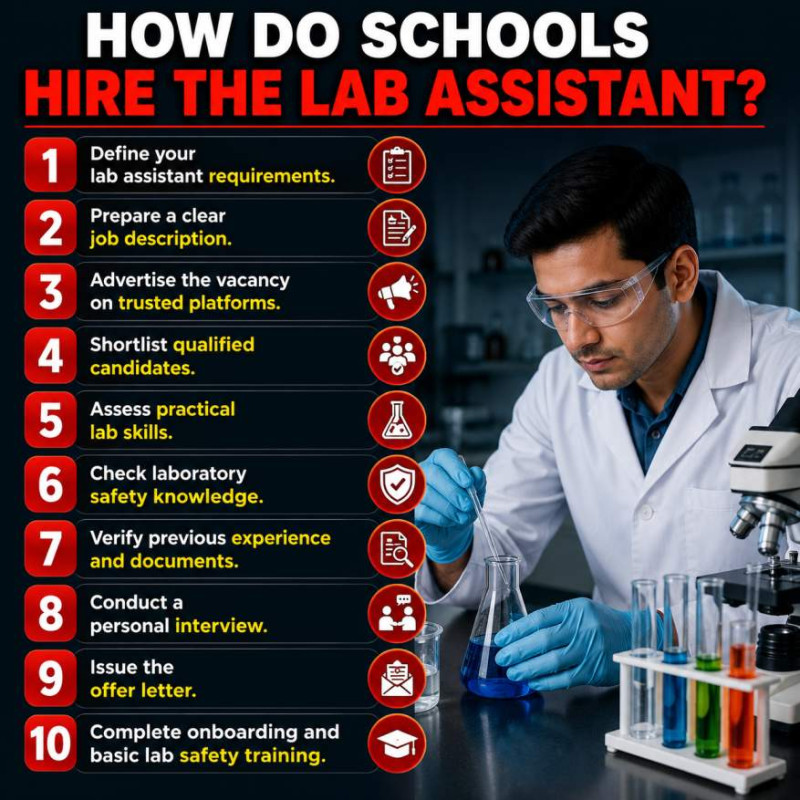
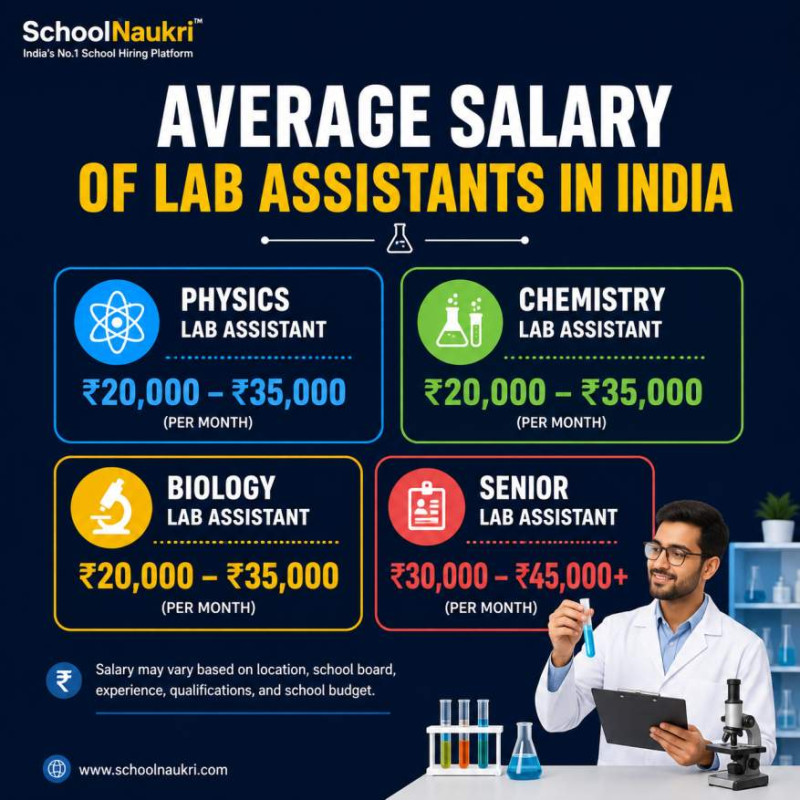
In this complete SchoolNaukri guide, you'll learn how to hire qualified Physics, Chemistry, and Biology lab assistants for your school. We'll cover qualifications, responsibilities, salary expectations, interview questions, practical skill assessments, and a step-by-step recruitment process to help you make the right hiring decision.
Why Hiring the Right Lab Assistant Matters
A science laboratory is one of the most important learning spaces in a school. Students understand concepts better when they perform experiments themselves. Behind every successful practical class is a well-prepared laboratory, and that's where a lab assistant plays an important role.
A good lab assistant doesn't just arrange equipment. They prepare the laboratory before practical sessions, ensure all materials are available, help teachers during experiments, maintain laboratory records, and follow proper safety procedures.
Hiring the right lab assistant helps schools:
- Improve the quality of practical classes.
- Keep students and teachers safe in the laboratory.
- Maintain expensive laboratory equipment properly.
- Prepare experiments before every practical session.
- Support Physics, Chemistry, and Biology teachers.
- Maintain laboratory stock and inventory.
- Reduce equipment damage and chemical wastage.
- Keep the laboratory clean and organized.
- Save teachers' time during practical classes.
- Build parents' confidence in the school's science education.
A reliable lab assistant allows teachers to focus on teaching while ensuring the laboratory runs smoothly throughout the academic year. This improves both the learning experience and the overall efficiency of the school.
Also Read-How to Find and Hire Sports Teachers for Schools in India - Simple School Guide
Roles and Responsibilities of a School Lab Assistant
A school lab assistant supports science teachers by preparing the laboratory before practical classes and ensuring everything is ready for students. They help maintain a safe, clean, and organized lab where students can perform experiments with confidence.
Depending on the school, a lab assistant may work in the Physics, Chemistry, Biology, or combined science laboratory.
Their main responsibilities include:
- Prepare laboratory equipment before practical classes.
- Arrange chemicals, specimens, models, and apparatus.
- Assist teachers during practical sessions.
- Ensure students follow laboratory safety rules.
- Clean and maintain laboratory equipment after use.
- Maintain stock registers and inventory records.
- Store chemicals and laboratory materials safely.
- Report damaged or missing equipment.
- Dispose of laboratory waste safely.
- Keep the laboratory neat, clean, and organized.
A responsible lab assistant helps practical classes run smoothly and reduces the workload of science teachers.
Qualification Required for School Lab Assistants
Before hiring a lab assistant, schools should clearly define the qualification and experience required for the role. While requirements may vary from one school to another, most schools look for candidates with relevant science qualifications and practical laboratory experience.
Educational Qualification
Most schools prefer candidates with:
- 10+2 (Science) or above.
- Diploma or Bachelor's degree in Physics, Chemistry, Biology, or a related science subject.
- Laboratory Technician or Medical Laboratory Technology (MLT) qualification (preferred by some schools).
- Basic computer knowledge for maintaining laboratory records.
Experience
Schools generally prefer candidates who have:
- Experience working in a school, college, or laboratory.
- Knowledge of laboratory equipment and instruments.
- Experience handling chemicals and laboratory materials safely.
- Understanding of laboratory safety procedures.
- Ability to maintain laboratory inventory and records.
Freshers with good practical knowledge, a positive attitude, and a willingness to learn can also be considered, especially if they perform well during the practical assessment and interview.
Also Read-How Schools Can Hire French & German Language Teachers in India
Skills Every School Should Look For
Qualifications are important, but practical skills often matter even more when hiring a lab assistant.
Look for candidates who can:
- Handle laboratory equipment carefully.
- Follow laboratory safety rules.
- Prepare experiments accurately.
- Organize chemicals and laboratory materials properly.
- Maintain inventory records.
- Work well with teachers and students.
- Stay calm during practical sessions.
- Pay attention to small details.
- Solve basic laboratory problems quickly.
- Keep the laboratory clean and well organized.
A candidate with strong practical skills, discipline, and a safety-first approach is often a better choice than someone who has qualifications but little hands-on experience.
Common Mistakes Schools Should Avoid While Hiring Lab Assistants
Many schools rush the recruitment process when there is an urgent vacancy. This often leads to poor hiring decisions and problems later.
Avoid these common mistakes:
- Hiring based only on qualifications.
- Skipping a practical skills assessment.
- Not checking laboratory safety knowledge.
- Ignoring previous work experience.
- Not verifying certificates and references.
- Conducting only a short interview.
- Hiring without explaining job responsibilities.
- Not checking communication and teamwork skills.
- Focusing only on salary instead of overall suitability.
- Providing little or no onboarding after joining.
Taking a little extra time during recruitment can help schools avoid costly hiring mistakes.
How SchoolNaukri Helps Schools Hire Lab Assistants
Finding a reliable Physics, Chemistry, or Biology Lab Assistant can take time, especially when schools need to fill vacancies quickly.
SchoolNaukri makes the hiring process simple by connecting schools with qualified education professionals across India.
Schools can:
- Search lab assistant resumes by qualification, experience, and location.
- Post lab assistant vacancies and receive applications from suitable candidates.
- Shortlist applicants and contact them directly.
- Hire faster using a dedicated school recruitment platform.
- Access over 10 lakh teacher and education professional resumes across India.
- Join 20,000+ registered schools already using SchoolNaukri.
Visit www.schoolnaukri.com to hire qualified Physics, Chemistry, and Biology Lab Assistants for your school.
SchoolNaukri Insight
At SchoolNaukri, we've worked with thousands of schools across India, and one thing we've learned is that hiring the right Lab Assistant is about much more than checking qualifications.
The best Lab Assistants are those who are responsible, careful, and confident in handling laboratory equipment. They understand laboratory safety, keep the lab organized, and are always ready to support teachers during practical classes.
We've also seen that great schools don't treat hiring as the final step. They treat it like holding someone's hand in the beginning. After selecting a Lab Assistant, they provide proper guidance, explain school procedures, and offer training during the first few weeks. This helps new employees settle in faster and perform their job with confidence.
In our experience, schools that combine careful hiring with good onboarding and regular support build stronger laboratory teams, improve practical learning, and face fewer recruitment problems in the long run.
Conclusion
Hiring the right Physics, Chemistry, or Biology Lab Assistant can make a big difference to your school's science education. A good Lab Assistant helps teachers conduct practical classes smoothly, keeps the laboratory safe and organized, and ensures students get the best hands-on learning experience.
Don't rush the hiring process. Take time to write a clear job description, assess practical skills, verify documents, and choose someone who is responsible, safety-conscious, and willing to learn.
Remember, great hiring doesn't end when the candidate joins—it begins there. The best schools treat hiring like holding someone's hand. They guide, train, and support new employees until they become confident in their role. This not only improves performance but also helps schools build a stable and reliable laboratory team.
We hope this guide helps you hire the right Lab Assistant for your school. A thoughtful hiring process today can lead to safer laboratories, better practical classes, happier teachers, and improved learning outcomes for students in the years ahead.
About the Authors
Abhishek Ranjan and Atul Kumar are the founders of SchoolNaukri, India's No.1 School Hiring & Teacher Recruitment Platform.
By working closely with thousands of schools, principals, and school management teams across India, they have gained practical experience in school recruitment and hiring.
In this guide, they share simple and practical tips to help schools hire the right Physics, Chemistry, and Biology Lab Assistants. From writing a job description and assessing practical skills to conducting interviews and onboarding, the goal is to help schools make better hiring decisions and build a strong laboratory team.