
How to Create a Sanskrit Teacher Resume & Get a Teaching Job
How to Create a Sanskrit Teacher Resume & Get a Teaching Job
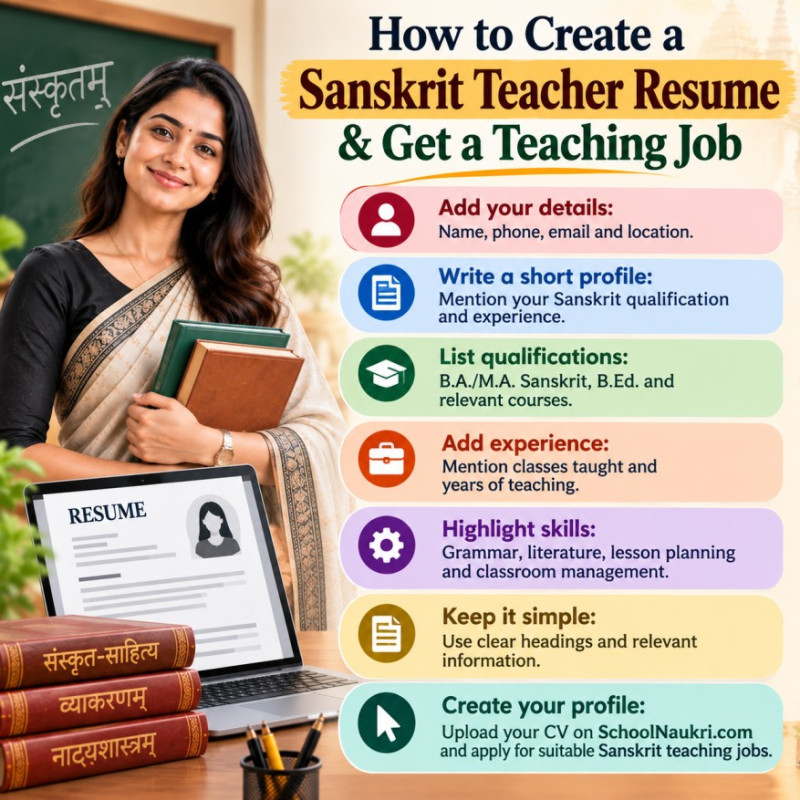
For a Sanskrit teacher, having the right qualification is important—but getting shortlisted often depends on how clearly your resume or CV presents your skills and teaching experience.
A school should be able to look at your resume and quickly understand what you can teach, which classes you have handled, your qualifications, and what kind of teaching experience you bring.
Whether you are a fresher looking for your first Sanskrit teaching job or an experienced teacher searching for a better opportunity, a clear and well-written resume can make your job search easier.
SchoolNaukri Insight
While making your Sanskrit Teacher Resume, don't just write your degree and work experience. Mention your achievements too. If you helped students improve their marks, won a competition, organized a Sanskrit event, or received an award, add it to your CV.
Also, don't write anything that isn't true. Schools may ask about the details during the interview, so make sure you can explain everything you have mentioned.
Before going for an interview, read your own resume once and prepare for questions based on it, such as:
- Which classes have you taught?
- What Sanskrit topics are you good at?
- How do you make Sanskrit easy for students?
- What is your biggest teaching achievement?
- How do you help weak students?
- What teaching methods do you use?
A good resume tells your story clearly—and helps you feel more confident when the school asks about it.
What Should a Sanskrit Teacher Resume Include?
A good Sanskrit Teacher Resume does not need to be very long. It should contain the information a school needs to decide whether you are suitable for the position.
Include these important sections:
- Full name and contact details
- Current location
- Professional summary or career objective
- Educational qualifications
- B.Ed. or other teaching qualifications
- Sanskrit specialization
- Teaching experience
- Classes and subjects taught
- Teaching skills
- Certifications or training
- Achievements
- Languages known
Keep the information relevant to teaching. A school should not have to search through several pages to find your important qualifications.
Read Also-Teacher Resume Kaise Banaye Freshers – Free Resume Format for Teaching Job in India
How to Write a Sanskrit Teacher Resume Summary
Your resume summary is the first thing a school may read. Keep it short, clear, and related to Sanskrit teaching.
For an experienced teacher:
“Sanskrit Teacher with experience teaching Sanskrit language, grammar and literature. Skilled in lesson planning, classroom management and helping students improve their reading and writing.”
For a fresher:
“Sanskrit graduate with B.Ed. and a strong interest in school teaching. Interested in helping students learn Sanskrit through simple explanations and engaging classroom activities.”
Tip: Don't write a long paragraph. In 2–3 sentences, tell the school what you teach, your experience, and what you are good at.
How to Mention Your Sanskrit Teaching Experience
Don't just write:
“Worked as a Sanskrit Teacher.”
Tell the school what you actually did.
For example:
Sanskrit Teacher – ABC Public School
2022–2026
- Taught Sanskrit to Classes 6–10.
- Taught grammar, literature, reading and writing.
- Prepared lessons and classroom activities.
- Conducted tests and checked student progress.
- Helped students improve their Sanskrit skills.
If you have taught under a particular board or curriculum, mention it. Also include the classes you handled because this helps schools quickly understand whether your experience matches their requirement.
Important Skills for a Sanskrit Teacher Resume
Schools may look for both subject knowledge and teaching ability.
Some useful skills to include in your Sanskrit Teacher CV are:
- Sanskrit grammar
- Sanskrit literature
- Reading and writing
- Lesson planning
- Classroom management
- Student assessment
- Communication skills
- Activity-based teaching
- Student engagement
- Basic digital teaching skills
Only include skills you genuinely have. A shorter list of relevant skills is better than filling the CV with keywords.
Sanskrit Teacher Resume Format – Sample
You can use the following simple format when creating your Sanskrit Teacher CV:
SANSKRIT TEACHER RESUME
Name: Your Full Name
Phone: Your Mobile Number
Email: Your Email Address
Location: City, State
Professional Summary
Write 2–3 lines about your teaching experience, qualifications and strengths.
Educational Qualification
- M.A./M.A. Sanskrit – University Name
- B.A./B.A. Sanskrit – University Name
- B.Ed. – College/University Name
Teaching Experience
School Name – Sanskrit Teacher
Year – Year
- Classes taught
- Subjects/topics handled
- Major responsibilities
- Student activities or achievements
Teaching Skills
- Sanskrit Grammar
- Sanskrit Literature
- Lesson Planning
- Classroom Management
- Student Assessment
Certifications
Mention relevant teaching or subject-related certifications.
Achievements
Mention relevant academic or teaching achievements.
Languages
Mention the languages you can speak, read or write.
Read Also - How to Find Teaching Jobs Near Me?
Sanskrit Teacher Resume for Freshers
If you have just completed your education and don't have school teaching experience, don't worry. You can still create a strong Sanskrit Teacher Resume for Fresher.
Focus on:
- Your Sanskrit qualification
- B.Ed. or teaching qualification
- Teaching internship
- Practice teaching
- Demo teaching experience
- Sanskrit-related projects
- Relevant certifications
- Communication and classroom skills
For example, if you completed teaching practice during B.Ed., mention the classes and subjects you handled instead of leaving the experience section empty.
Sanskrit Teacher Resume for Experienced Teachers
Experienced teachers should make their practical experience easy to see.
Mention:
- Total years of teaching experience
- Classes taught
- Subjects handled
- Previous schools
- Board/curriculum experience
- Student results or achievements
- School responsibilities
- Activities conducted
- Any leadership responsibilities
For example, saying “8 years of experience teaching Sanskrit to Classes 6–10” is much more useful to a school than simply writing “8 years teaching experience.”
Common Mistakes in a Sanskrit Teacher CV
Even good teachers can make small mistakes in their CV. Here are some common ones to avoid:
1. Using the Same CV Everywhere
Change your CV slightly based on the school and the classes they are hiring for. Highlight relevant Sanskrit teaching experience.
2. Making the CV Too Long
Keep it short and simple. Add only information that is useful for the school.
3. Only Mentioning Degrees
Don't just list your qualifications. Also mention your teaching experience, skills, and what you can do in the classroom.
4. Not Mentioning Classes Taught
Clearly mention which classes or grades you have taught, such as Classes 6–10 or 11–12.
5. Forgetting Contact Details
Make sure your phone number and email address are correct and easy to find.
6. Not Updating Your CV
Update your CV whenever you gain new teaching experience, complete a course, or achieve something important.
Read Also -How to Get a Teaching Job in 7 Days – Complete Guide for Teachers in India
How to Get a Sanskrit Teaching Job After Creating Your Resume
Creating a good resume is only the first step. You also need to make sure schools can find you.
Start by creating a teacher profile on job platforms, upload your latest Sanskrit Teacher CV, and regularly search for suitable vacancies.
When applying, check:
- School location
- Classes required
- Qualification
- Experience requirement
- Salary
- Joining date
- Other school expectations
Don't apply randomly to every vacancy. Focus on jobs that match your qualifications and experience.
How SchoolNaukri Helps Sanskrit Teachers
- Create a Free Resume/CV: Create a professional Sanskrit Teacher resume online for free.
- Apply for School Jobs: Find and apply for Sanskrit teaching vacancies across India.
- Reach 20,000+ Schools: Explore teaching opportunities from schools across India.
- Create a Free Profile: Build your teacher profile and upload your CV.
- 10 Lakh+ Teacher Resumes: Join a growing network of teachers across India.
Create your free profile on SchoolNaukri.com and start applying for Sanskrit teaching jobs today.
FAQs
1. How should I write a Sanskrit Teacher resume?
Keep it simple and include your qualifications, teaching experience, classes taught, Sanskrit skills, achievements and contact details.
2. What should I include in a Sanskrit Teacher CV?
Include your educational qualifications, B.Ed., teaching experience, Sanskrit skills, classes taught, achievements and relevant certifications.
3. What skills should I add to my Sanskrit Teacher resume?
You can mention Sanskrit grammar, literature, lesson planning, classroom management, student assessment and communication skills.
4. How can a fresher create a Sanskrit Teacher CV?
A fresher should focus on education, B.Ed., teaching internships, practice teaching, certifications and relevant skills.
5. How do I write a Sanskrit Teacher resume with experience?
Mention your previous schools, years of experience, classes taught, responsibilities, curriculum or board experience and relevant achievements.
6. What should a Sanskrit Teacher career objective include?
It should briefly describe your Sanskrit qualification, teaching strengths and interest in working as a Sanskrit teacher.
7. Where can I find Sanskrit teaching jobs?
You can search school job portals, recruitment platforms, local opportunities and teacher networks for Sanskrit teaching vacancies.
8. How can I apply for Sanskrit Teacher vacancies?
Prepare an updated CV, search for suitable vacancies and apply according to the school's qualification, experience and location requirements.
9. Can I get a Sanskrit teaching job as a fresher?
Yes. Schools may have opportunities for freshers depending on their qualification and requirements. A strong CV and good demo-teaching skills can help.
10. How can I make my Sanskrit Teacher resume stand out?
Clearly show your Sanskrit qualifications, teaching experience, classes taught, practical teaching skills and achievements instead of simply listing degrees.
Conclusion
Creating a good Sanskrit Teacher resume does not have to be difficult. You just need to clearly show what you have studied, where you have taught, which classes you can handle, and what makes you a good teacher.
Keep your CV simple, honest, and easy for a school to read. Once it is ready, don’t just keep it on your phone—put it in front of schools and start applying for suitable Sanskrit teaching jobs.
Create your profile on SchoolNaukri.com, upload your updated CV, and explore teaching opportunities that match your qualification and preferred location.
Your resume may be just one page, but it can be the first step toward your next teaching opportunity.
About the Authors
Atul Kumar (M.Tech, IIT Bombay) and Abhishek Ranjan (MBA) are the founders of SchoolNaukri, India's premier school-focused teacher recruitment and hiring platform. Having supported over 20,000 schools and connected more than 10 lakh teachers with career opportunities, they work closely with school management, HR teams, and principals to streamline staffing. They are also the authors of The Ultimate School Hiring Workbook, a practical guide featuring screening checklists, written tests, and evaluation tools for modern educators.SchoolNaukri — Where Great Schools Hire Great Teachers.