

How to Become a School Principal in India: Qualification, Experience, Skills, Salary & Career Path
Introduction
Becoming a School Principal in India is a dream for many teachers. A Principal is the leader of a school. The Principal guides teachers, supports students, communicates with parents, and works with the school management.
But becoming a Principal does not happen only by completing a degree.
Schools usually look for a person who has the right education, teaching experience, leadership skills, and a good understanding of how a school works.
If you are a teacher, HOD, Academic Coordinator, or Vice Principal and want to become a School Principal, this guide will help you understand the career path in simple language.
Important note: The exact qualification and experience requirements for a Principal can differ according to the school, board, recruitment rules, and type of position. Always check the official job advertisement and applicable rules before applying.
Who Is a School Principal?
A School Principal is the main academic and administrative leader of a school.
In simple words, a Principal makes sure that the school runs properly.
A Principal works with:
Teachers
Students
Parents
School management
Administrative staff
Academic Coordinators
Heads of Departments
Support staff
A good Principal does not only sit in an office and give instructions. The Principal needs to understand teaching, learning, people, school systems, and everyday problems.
What Does a School Principal Do?
The exact work of a Principal depends on the size and type of school.
Common responsibilities may include:
Leading the academic team.
Supporting and guiding teachers.
Observing teaching and learning.
Reviewing student performance.
Maintaining school discipline.
Communicating with parents.
Conducting staff meetings.
Supporting teacher training.
Helping with teacher recruitment.
Planning school activities.
Handling serious student or parent issues.
Working with school management.
Read Also-How to Create a Professional School Principal Resume for Free: Step-by-Step Guide
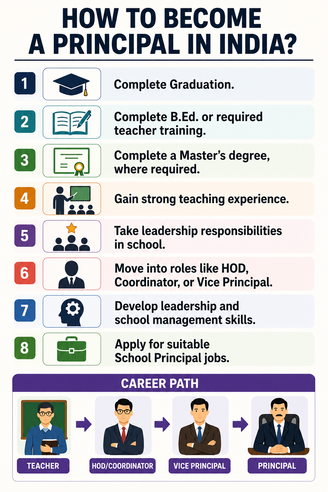
Step-by-Step Process to Become a School Principal in India
The journey to becoming a School Principal usually starts as a teacher and slowly moves towards school leadership. The exact qualification and experience requirements may differ depending on the school, board, and vacancy.
Step 1: Complete Your Graduation
Complete a bachelor’s degree in a subject related to your teaching career. Your graduation subject can help you start your journey as a school teacher.
Step 2: Complete Your B.Ed. or Required Teacher Training
Complete the professional teaching qualification required for the teaching role you want to enter. For many school teaching and leadership career paths, a B.Ed. is an important qualification.
Step 3: Complete a Master’s Degree Where Required
Many senior school leadership positions look for candidates with postgraduate qualifications. Choose a relevant master’s degree based on your academic background and career goals.
Always check the exact qualification requirements of the school and Principal vacancy.
Step 4: Start Your Career as a Teacher
Work as a school teacher and gain real classroom experience. During this time, learn about:
- Teaching and lesson planning
- Classroom management
- Student assessment
- Parent communication
- School discipline
- School activities and events
Strong teaching experience creates a good base for future leadership roles.
Step 5: Take Leadership Responsibilities
Do not limit yourself only to classroom teaching. Take meaningful responsibilities such as:
- Leading a subject department
- Mentoring new teachers
- Coordinating examinations
- Managing school events
- Handling parent meetings
- Supporting academic planning
- Coordinating a class, section, or department
These responsibilities help you build real leadership experience.
Step 6: Move into a School Leadership Role
With experience, you may move into roles such as:
Teacher → Senior Teacher → HOD → Academic Coordinator → Vice Principal → Principal
This career path is only an example. The actual journey can be different for each person and school.
Step 7: Develop Principal-Level Skills
Before applying for Principal jobs, work on important leadership skills such as:
- Team management
- Communication
- Decision-making
- Conflict resolution
- Academic planning
- Teacher development
- Parent handling
- Student discipline
- School administration
- Problem-solving
A Principal needs to understand both education and people management.
Step 8: Create a Leadership-Focused Resume
Your Principal resume should not look like a basic teacher resume.
Show your real experience in:
- Leading teachers
- Managing departments
- Improving academic processes
- Handling parents
- Organizing major school activities
- Mentoring teachers
- Managing school responsibilities
Use real examples and never add false achievements.
Step 9: Prepare for Principal Interviews
Prepare for questions about:
- Your leadership style
- Improving school results
- Managing weak teachers
- Handling angry parents
- Student discipline
- Staff conflicts
- Teacher motivation
- School safety
- Your first 90-day plan
Read Also-16 Most Asked School Principal Interview Questions and Answers to Crack Leadership Interviews
Step 10: Apply for Suitable Principal Vacancies
Read each job description carefully before applying. Check the required qualification, experience, school type, location, and leadership expectations.
How SchoolNaukri Can Help Principals
SchoolNaukri can help experienced school leaders in the following ways:
Create Your Free Principal Resume
Explore Principal & School Leadership Jobs
Explore School Leadership Jobs
Download the SchoolNaukri App
Stay updated with new Principal and school leadership job opportunities and apply easily.
Frequently Asked Questions
1. How can I become a School Principal in India?
To become a School Principal, you generally need suitable academic qualifications, teaching qualifications where required, teaching experience, and school leadership experience. The exact requirements can vary by school type and recruitment rules.
2. What qualification is required to become a School Principal?
The required qualification may differ depending on the school, board, state, and recruitment rules. Many Principal vacancies look for postgraduate education, professional teaching qualifications such as B.Ed. where required, and relevant teaching or leadership experience. Always check the official job notification.
3. Is B.Ed. compulsory to become a School Principal?
The requirement can vary depending on the school and recruitment rules. Many school leadership vacancies prefer or require a B.Ed. or another recognised teaching qualification. Candidates should check the exact eligibility criteria before applying.
4. How much experience is required to become a Principal?
There is no single experience requirement for every school in India. Schools may ask for several years of teaching, academic coordination, administration, or leadership experience depending on the position.
5. Can a teacher become a School Principal?
Yes. Many School Principals start their careers as teachers. With experience, they may move into roles such as Senior Teacher, HOD, Academic Coordinator, Vice Principal, and then Principal.
6. What skills are needed to become a good School Principal?
A good Principal needs leadership, communication, decision-making, problem-solving, team management, parent handling, conflict resolution, and school administration skills.
7. What is the career path to become a School Principal?
A common career path can be:
Teacher → Senior Teacher → HOD → Academic Coordinator → Vice Principal → Principal
The actual career path may differ from one school to another.
8. What is the salary of a School Principal in India?
Principal salaries vary widely depending on the school, location, experience, responsibilities, and school size. International schools, large private schools, and senior leadership positions may offer different salary packages from smaller schools.
9. Can I become a Principal directly after completing B.Ed.?
Usually, completing a B.Ed. alone is not enough for a Principal position. Schools generally look for experienced candidates who understand teaching, school administration, staff management, and academic leadership.
10. How can I prepare for a School Principal interview?
Learn about the school before the interview and prepare real examples from your experience. Be ready for questions about teacher management, student discipline, angry parents, academic improvement, staff conflicts, school safety, and your leadership style.
11. Where can I find School Principal jobs in India?
You can search for Principal, Vice Principal, Head of School, Academic Coordinator, and other school leadership vacancies through school career pages and teacher job portals such as SchoolNaukri.com.
12. Can a Vice Principal become a Principal?
Yes. Vice Principal experience can help a candidate prepare for a Principal role because it often includes academic management, teacher coordination, student discipline, parent communication, and other leadership responsibilities.
Conclusion
Becoming a School Principal is a journey that takes time, experience, and continuous learning. Most Principals start as teachers and slowly move into leadership roles such as HOD, Academic Coordinator, or Vice Principal.
Focus on improving your teaching experience, leadership skills, communication, team management, and understanding of school administration. Take extra responsibilities in your school whenever you get the opportunity.
Do not rush the journey. Every class you teach, teacher you support, parent you handle, and problem you solve helps prepare you for school leadership.
Keep learning, build real leadership experience, prepare a strong resume, and apply for Principal positions that match your qualifications and experience. A good Principal does more than manage a school—they help teachers perform better and create a better learning environment for students.