
How to Start a CBSE School in India – Affiliation Process, Documents & Eligibility Checklist
How to Start a CBSE School in India?
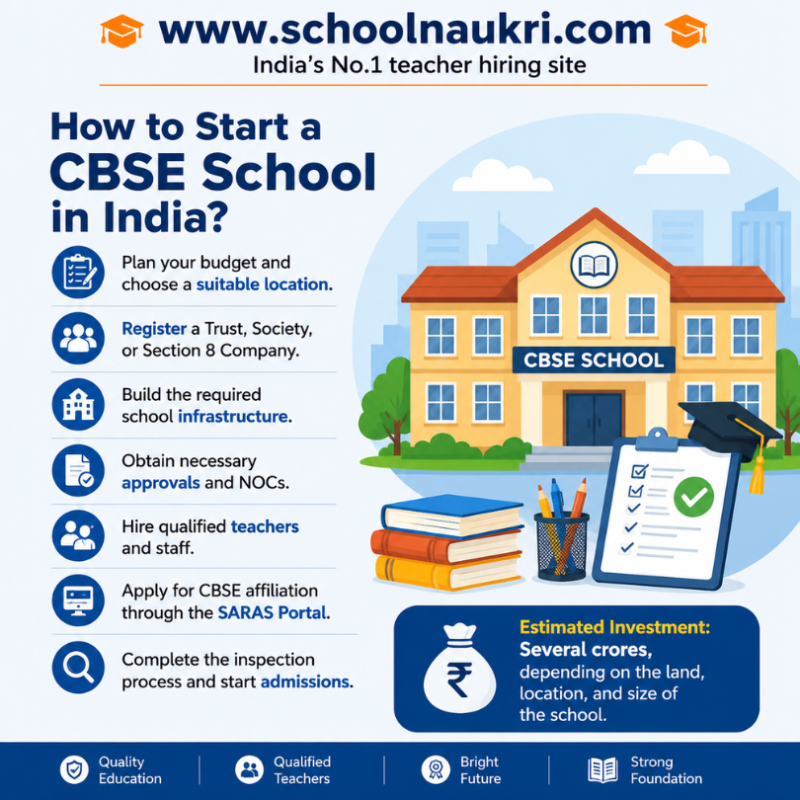
Starting a CBSE school in India involves planning your budget, acquiring suitable land, registering a trust, society, or Section 8 company, constructing the required infrastructure, obtaining state government approvals, hiring qualified staff, and applying for CBSE affiliation. The investment required can range from several crores, depending on the location, land cost, and school size. Proper planning and compliance with CBSE and local regulations are essential for establishing a successful school.
Introduction
Starting a CBSE school in India is a dream for many educators, entrepreneurs, and social organizations who want to contribute to quality education while building a sustainable institution.
However, opening a CBSE school is not as simple as constructing a building and admitting students. It requires careful planning, adequate investment, suitable land, legal registration, infrastructure development, qualified teachers, government approvals, and CBSE affiliation.
The process may seem complicated, especially for first-time school founders. Questions about land requirements, construction costs, staff salaries, CBSE norms, and the affiliation process often create confusion.
The good news is that with proper planning and the right guidance, starting a CBSE school can become a well-organized and achievable goal. Whether you want to establish a primary school, secondary school, or senior secondary institution, understanding each step beforehand can save both time and money.
This complete step-by-step guide explains everything you need to know about starting a CBSE school in India, including eligibility, registration, land requirements, infrastructure, investment, CBSE affiliation, teacher recruitment, and practical tips for successfully launching and managing your school.
Step-by-Step Process to Start a School
Step 1 – Decide Your School Type and Vision
Before starting a school, decide-
- Will it be Play School, Primary School or Senior Secondary School?
- Will it be English-medium or Hindi-medium?
- Will it be day school or residential school?
- Which city or district will you target?
- What fee structure will you keep?
- Which type of parents are your target audience?
Many new schools start from Nursery to Class 5 and later expand to higher classes.
Step 2 – Register a Society, Trust or Section 8 Company
A CBSE school cannot be owned by one person in personal capacity.
You need to register one of these--
- Society
- Public Trust
- Section 8 Company
Most schools in India are started under a society registration.
You will need:
- PAN card
- Aadhaar card
- Address proof of members
- Memorandum of Association
- Rules and regulations
- Society registration certificate
CBSE rules clearly mention that schools should be run by a non-proprietary body.
Read Also- How to Hire Teachers in India (2026 Guide) – Interview Questions, Salary, Skills & Hiring Tips
Step 3 – Buy or Lease Land for the School
Land is one of the biggest requirements for starting a CBSE school.
In many normal areas, CBSE schools usually need around 4000 square metres of land. In large cities, municipal areas, hill stations and North Eastern states, the land requirement may be lower.
The land should-
- Be in one single piece
- Be in the name of the society, trust or company
- Have proper road access
- Have boundary wall
- Have approved land use for school purpose
- If the land is leased, the lease should usually be for at least 15 years.
Important land papers include-
- Sale deed
- Lease deed
- Mutation papers
- Jamabandi or khasra details
- Site map
- Land certificate
Read Also-Minimum Infrastructure Required for CBSE Affiliation – Land, Classroom & Lab Rules Guide
Step 4 – Build School Infrastructure
After land, the next step is infrastructure.
Your school should have-
- Classrooms
- Office room
- Principal room
- Library
- Science lab
- Computer lab
- Playground
- Toilets for boys and girls
- Drinking water facility
- CCTV cameras
- Ramp for disabled students
- Staff room
CBSE expects classrooms to be around 500 square feet in size with proper ventilation and lighting. Schools also need library, science lab, computer lab and sports facilities.
Step 5 – Get Recognition from State Government
Before applying for CBSE affiliation, the school must first get recognition from the state education department.
Recognition is usually issued by-
- District Education Officer
- State Education Department
- Local education authority
Without recognition, CBSE does not normally accept the application.
Step 6 – Apply for NOC
NOC means No Objection Certificate.
This document is issued by the state government and says that the government has no objection if the school gets CBSE affiliation.
In many states, getting the NOC takes time.
So schools should apply for NOC early.
Step 7 – Hire Teachers and Staff
A school cannot run only with building and furniture.
Good teachers are one of the biggest factors behind school success.
You will need:
- Principal
- Teachers
- Office staff
- Accountant
- Receptionist
- Librarian
- Lab assistant
- Physical education teacher
- Counsellor
CBSE rules say that teacher-student ratio should normally not exceed 30:1. One section should usually not have more than 40 students.
Schools should pay teacher salary through bank transfer or ECS instead of cash.
Read Also-Teacher Qualification for CBSE Schools in India – NCTE Norms & PRT TGT PGT Eligibility Guide
Step 8 – Arrange Important Certificates
Schools need many certificates before applying for CBSE affiliation.
Important certificates include-
- Fire Safety Certificate
- Building Safety Certificate
- Water Certificate
- Sanitary Certificate
- Recognition Certificate
- NOC
- Land Certificate
CBSE expects these certificates to be valid on the date of application.
Step 9 – Create School Website and Public Disclosure Page
CBSE requires schools to maintain a website.
The school website should include-
- Teacher details
- Fee structure
- Affiliation details
- Recognition certificate
- NOC
- Fire certificate
- Building safety certificate
- Water certificate
- School Management Committee details
- PTA details
- Infrastructure details
Many schools ignore this step and later face problems during inspection.
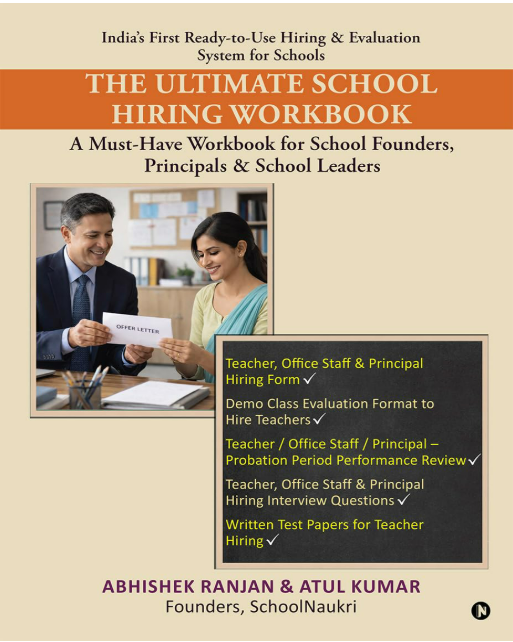
Schools starting a new CBSE school also need proper systems for hiring teachers, principals and office staff. “The Ultimate School Hiring Workbook” is a practical guide for school founders with interview questions, demo class evaluation forms, written tests, probation review sheets and ready-to-use hiring formats for teachers, principals and school office staff.
Step 10 – Apply for CBSE Affiliation
CBSE affiliation applications are usually submitted through the SARAS portal.
The process generally includes-
- Registration on SARAS portal
- Upload of documents
- Payment of fees
- Scrutiny of documents
- Inspection visit
- Correction of objections if any
- Approval and affiliation letter
Schools should upload only clear scanned copies with proper signatures and stamps.
To understand the CBSE affiliation application process step by step, schools can visit the official CBSE affiliation portal.
This portal provides detailed guidelines, application steps, document requirements and status tracking facility for schools applying for affiliation.Official Portal – https://saras.cbse.gov.in
Estimated Cost to Start a CBSE School in India
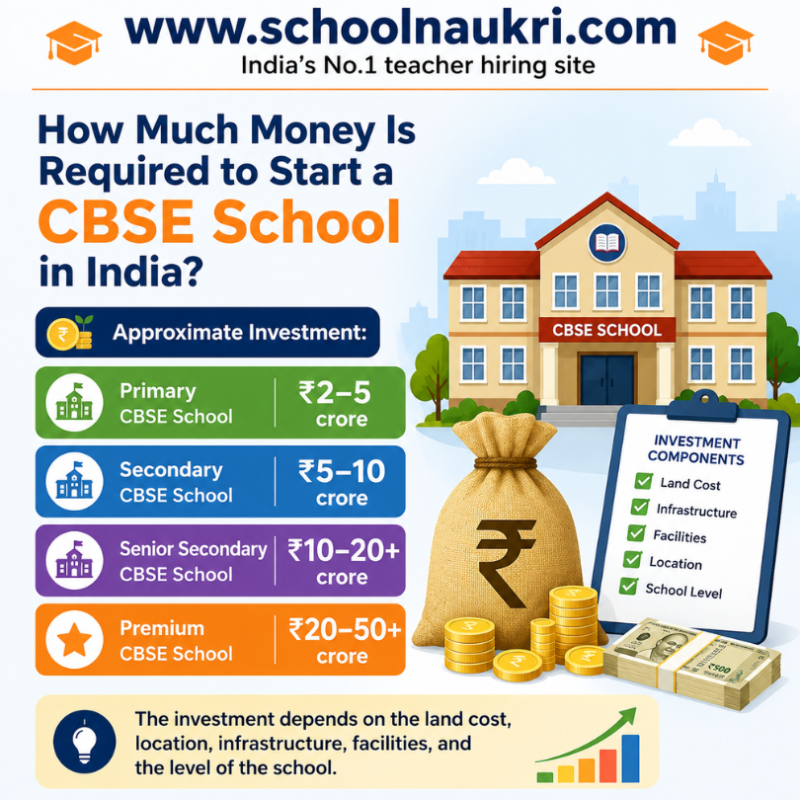
| Expense Category | Estimated Cost (₹) |
|---|---|
| Land Purchase | ₹50 Lakh – ₹10+ Crore |
| School Building Construction | ₹1 Crore – ₹10+ Crore |
| Furniture & Classroom Setup | ₹10 Lakh – ₹1 Crore |
| Computer & Science Labs | ₹5 Lakh – ₹50 Lakh |
| Library Setup | ₹2 Lakh – ₹20 Lakh |
| Playground & Sports Facilities | ₹5 Lakh – ₹50 Lakh |
| CCTV, Security & IT Infrastructure | ₹2 Lakh – ₹25 Lakh |
| Government Approvals & Documentation | ₹1 Lakh – ₹10 Lakh |
| Teacher & Staff Salaries (First Year) | ₹20 Lakh – ₹2+ Crore |
| Working Capital & Emergency Fund | ₹10 Lakh – ₹1 Crore |
Estimated Total Investment
| School Type | Estimated Investment |
|---|---|
| Small Town / Semi-Urban CBSE School | ₹2 Crore – ₹8 Crore+ |
| Tier-2 City CBSE School | ₹5 Crore – ₹20 Crore+ |
| Metro City CBSE School | ₹20 Crore – ₹100 Crore+ |
Note: The actual investment depends on land cost, location, school size, infrastructure standards, and the number of students planned for admission.
Documents Required for CBSE Affiliation
Schools usually need these documents:
- Society registration certificate
- Trust deed or Section 8 certificate
- PAN card
- Recognition certificate
- NOC
- Land certificate
- Sale deed or lease deed
- Building safety certificate
- Fire safety certificate
- Water and sanitation certificate
- Staff records
- Salary proof
- Financial records
- UDISE code
- School website details
For more detail read - https://www.cbse.gov.in/cbsenew/documents/affiliation-Bye-Laws.pdf
Common Mistakes School Founders Make
Many school founders make avoidable mistakes such as:
Buying land without checking school land norms
Starting construction before society registration
Ignoring NOC process
Hiring unqualified teachers
Not preparing website documents
Uploading expired certificates
Wrong land papers
Paying salary in cash
Weak financial planning
Avoiding these mistakes can save a lot of time and money.
Read Also - How to Get CBSE Affiliation for School in India – Complete Step-by-Step Guide
Important CBSE Rules Schools Should Know
Some important CBSE rules include:
School must be run by society, trust or Section 8 company
Land should usually be around 4000 square metres in normal areas
One section should not have more than 40 students
Teacher-student ratio should normally not exceed 30:1
Teacher salary should be paid through bank transfer
Schools should use NCERT books where available
School website and public disclosure are mandatory
These rules are mentioned in the CBSE Affiliation Bye-Laws.
Schools can also read the official CBSE Affiliation Bye-Laws PDF before applying because it explains important rules related to land, building, teachers, safety, student section limits and school website requirements.
FAQs – Starting a CBSE School in India
How much money is needed to start a CBSE school in India?
The investment required to start a CBSE school depends on factors such as land cost, location, infrastructure, and the size of the school. In many small towns and semi-urban areas, setting up a basic CBSE school may require an investment of several crores. School founders should prepare a detailed budget covering land, construction, furniture, laboratories, staff salaries, and other operational expenses.
Can one person start a CBSE school in India?
Generally, an individual cannot directly establish a CBSE-affiliated school. CBSE schools are usually managed by a registered Society, Public Trust, or Section 8 Company. Choosing the right legal structure is one of the first steps in starting a CBSE school.
Is a No Objection Certificate (NOC) required for CBSE affiliation?
In many cases, schools need a No Objection Certificate (NOC) or the required approval from the State Government before applying for CBSE affiliation. School founders should check the latest CBSE and state-specific guidelines before starting the application process.
How much land is required to start a CBSE school?
The land requirement depends on the location and category of the school. In many normal areas, CBSE generally expects around 4000 square metres of land, while different rules may apply for metro cities, hill stations, and North Eastern states. Schools should verify the latest CBSE land norms before purchasing land.
Can a school get CBSE affiliation on leased land?
Yes. A school can apply for CBSE affiliation on leased land if the lease agreement fulfils the applicable CBSE conditions. In many cases, a legally valid long-term lease, generally for at least 15 years, is expected along with proper documentation.
Is a school website compulsory for CBSE affiliation?
Yes. A school website is an important requirement for CBSE affiliation. Schools are generally expected to upload mandatory public disclosure information such as teacher details, fee structure, safety certificates, School Management Committee details, and other important documents. Keeping the website updated improves transparency and helps schools meet CBSE requirements.
How long does it take to start a CBSE school in India?
The time required depends on land availability, legal registration, infrastructure development, government approvals, and the CBSE affiliation process. Schools that plan properly and complete the required formalities on time can avoid unnecessary delays.
What is the biggest mistake people make while starting a CBSE school?
A common mistake is investing in land or constructing the school building without understanding CBSE rules and requirements. Proper planning for legal registration, land, infrastructure, documents, and staffing can save schools significant time and money.
Build a Strong School Team with SchoolNaukri
Starting or managing a school? Finding qualified teachers and school staff is one of the biggest challenges for school owners and principals. SchoolNaukri helps schools connect with the right education professionals across India.
Why Schools Choose SchoolNaukri
• Access 5 lakh+ teacher resumes across India.
• Hire Teachers, Principals, Vice Principals, and School Office Staff.
• Find subject-wise and role-specific candidates quickly.
• Receive applications from nearby cities and PAN India.
• Save time and simplify the school hiring process.
• Free registration for schools.
• Start hiring in just a few minutes.Visit:
SchoolNaukri – India's No.1 Teacher Hiring Job Site.
Conclusion
Starting a CBSE school in India is a long-term investment and a great opportunity to contribute to quality education. The process may seem complicated at first, but it becomes much easier when you plan each step carefully.
Before investing in land, construction, and staff, make sure you understand the legal requirements, choose the right organisation structure, check land and infrastructure norms, prepare the necessary documents, and estimate your budget. Good planning at the beginning can help schools avoid costly mistakes, delays, and unnecessary expenses.
The key to building a successful CBSE school is simple—plan early, stay organised, follow the latest CBSE guidelines, and complete each requirement step by step. A well-prepared school not only has a smoother affiliation process but also creates a strong foundation for long-term growth and quality education.
Official Resources for CBSE School Founders
1. CBSE Affiliation Bye-Laws
The CBSE Affiliation Bye-Laws explain the rules, eligibility criteria, land and infrastructure requirements, staff norms, and other conditions for obtaining and maintaining CBSE affiliation. It is the primary document every school founder should read.
🔗 CBSE Affiliation Bye-Laws
https://www.cbse.gov.in/cbsenew/aff_bye_laws.html2. CBSE SARAS Portal
The SARAS Portal is CBSE's online platform for applying for fresh affiliation, extension, and upgradation. Schools can submit applications, upload documents, and track their affiliation status through this portal.
🔗 CBSE SARAS Portal
https://saras.cbse.gov.in3. National Education Policy (NEP) 2020
NEP 2020 outlines the vision for school education in India, focusing on quality learning, foundational education, and holistic development. Understanding its recommendations can help school founders build a future-ready institution.
🔗 National Education Policy (NEP) 2020
https://www.education.gov.in/en/nep-new

About the Authors
Abhishek Ranjan and Atul Kumar are the founders of SchoolNaukri, India's No.1 Teacher Hiring Job Site, and actively work with school founders, principals, and management teams across India.
Through their work in the education sector, they help schools with teacher recruitment, school staffing, and practical school management solutions. They are committed to simplifying complex topics such as school setup, CBSE affiliation, and educational operations for aspiring and existing school owners.
They are also the authors of "The Ultimate School Hiring Workbook," a practical guide that helps schools build effective hiring systems and strong academic teams.